
{ "@context": "https://schema.org", "@type": "WebPage", "@id": "https://www.planaxion.com/en-ca/erp-decisions/distribution-erp-budget#webpage", "name": "Distribution ERP Budget", "url": "https://www.planaxion.com/en-ca/erp-decisions/distribution-erp-budget", "inLanguage": "en-CA", "publisher": { "@type": "Organization", "@id": "https://www.planaxion.com/#organization", "name": "PlanAxion", "url": "https://www.planaxion.com/" } }

ERP Decision Guide

What budget should you plan for a distribution ERP?

The budget depends on the complexity of your inventory, warehouses, pricing, EDI, e-commerce, carriers, and the number of branches.
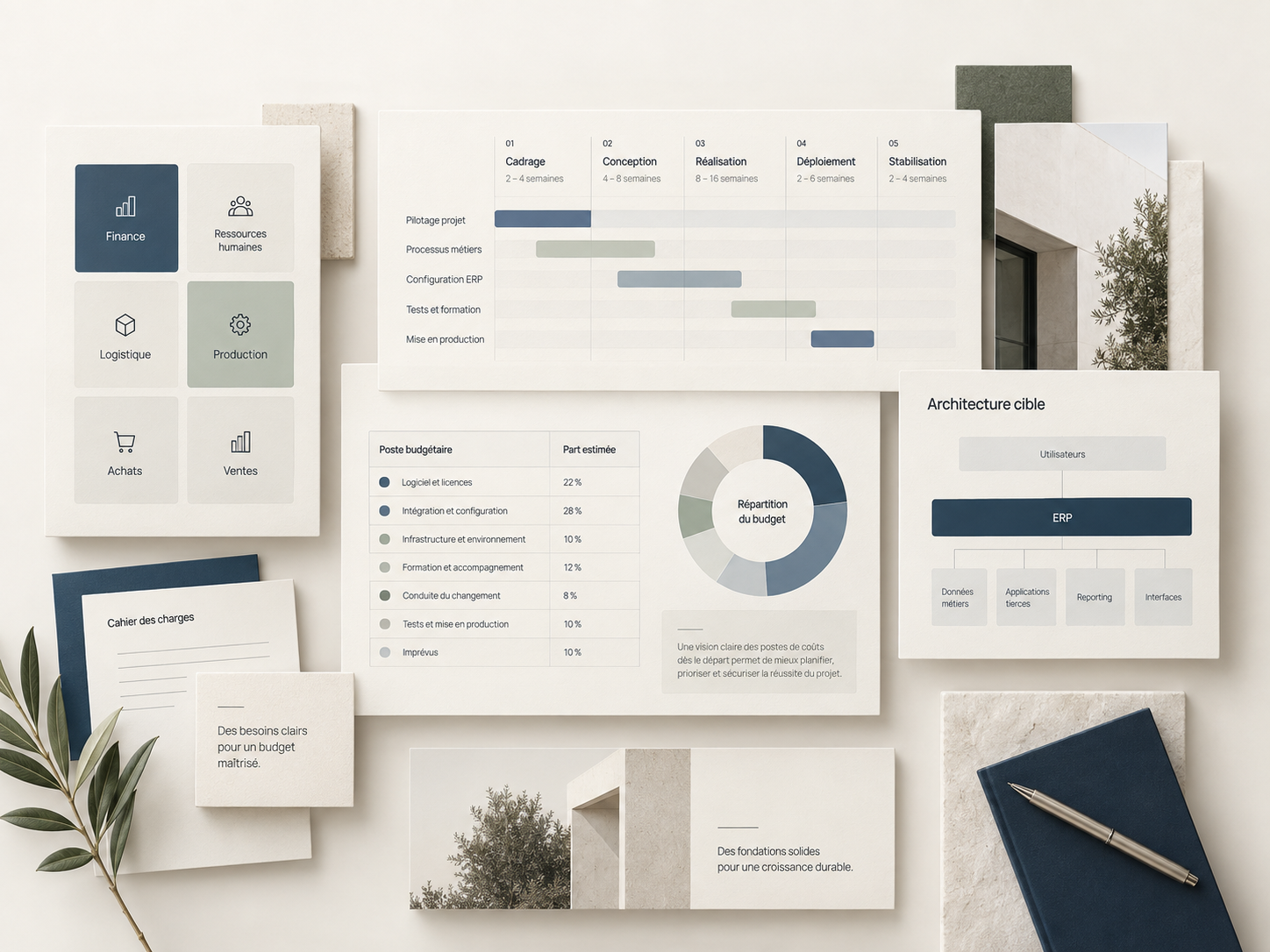
Editorial composition illustrating ERP project planning with modules, timeline, budget items, and target architecture.

Warehouses and integrations quickly drive up the effort.

A multi-site distributor must look beyond finance: inventory, availability, WMS, pricing, returns, EDI, and commercial integrations quickly cause the effort to vary.

ERP + WMS + EDI + e-commerce + data + deployment

  • Inventory is central to almost every workflow.
  • EDI can become a project in itself.
  • Branches add change and local variations.

Key factors that drive a distribution ERP budget

  1. ERP core and orders. Finance, purchasing, sales, inventory, and order management must be costed based on actual volumes and exceptions.
  2. Warehousing and logistics. Receiving, picking, shipping, transfers, WMS, carriers, and mobile equipment can significantly impact the level of effort.
  3. EDI, e-commerce, and channels. Every partner, format, and exception flow must be designed, tested, and monitored.
  4. Pricing and trade agreements. Price lists, promotions, rebates, contracts, commissions, and exceptions may require much more complex logic than standard features provide.
  5. Data and integrations. Items, customers, suppliers, inventory, history, and satellite systems must be prepared and reconciled.
  6. Volume testing and cutover. Peak scenarios, stockouts, returns, and business continuity must be tested before go-live.

The five questions that make two estimates comparable

  • Warehouses. How many sites, which technologies, and what workflows must be active on day one?
  • EDI. How many partners and documents are actually in scope?
  • Pricing. Which rules must function without manual intervention?
  • Channels. Which e-commerce platforms, marketplaces, and portals must remain synchronized?
  • Continuity. What level of service must be maintained during the cutover?

An estimate that does not detail WMS, EDI, pricing, and peak testing often underestimates the actual effort for a distributor.

To translate these cost factors into a scope and business case tailored to your organization, our independent ERP scoping clarifies the assumptions that need to be validated before comparing proposals. Share your ERP context and the next decision you need to make.

The questions that change a distribution ERP budget.

  1. Which order flows generate the most exceptions?
  2. Is the WMS staying in place?
  3. How many EDI partners must be ready on day one?
  4. How will prices be converted and validated?
  5. What cutover plan will protect operations?

Frequently asked questions

Should the WMS be included in the ERP budget?

Even if it remains separate, its integration, data, and end-to-end testing must be budgeted for.

Why does multi-site increase costs?

Because it adds variations in processes, training, data, and deployment.

Budget for your actual workflows, not a theoretical distribution model.

PlanAxion structures inventory, warehouse, EDI, and multi-site scenarios to compare proposals on a consistent basis.

Frame my distribution budget