
{ "@context": "https://schema.org", "@type": "WebPage", "@id": "https://www.planaxion.com/en-ca/erp-decisions/erp-data-migration-cost#webpage", "name": "ERP data migration cost", "url": "https://www.planaxion.com/en-ca/erp-decisions/erp-data-migration-cost", "inLanguage": "en-CA", "publisher": { "@type": "Organization", "@id": "https://www.planaxion.com/#organization", "name": "PlanAxion", "url": "https://www.planaxion.com/" } }

ERP Decision Guide

How much does an ERP data migration cost?

The cost is driven less by raw volume than by data quality, the number of sources, transformation rules, and the number of cycles required to achieve reliable data.
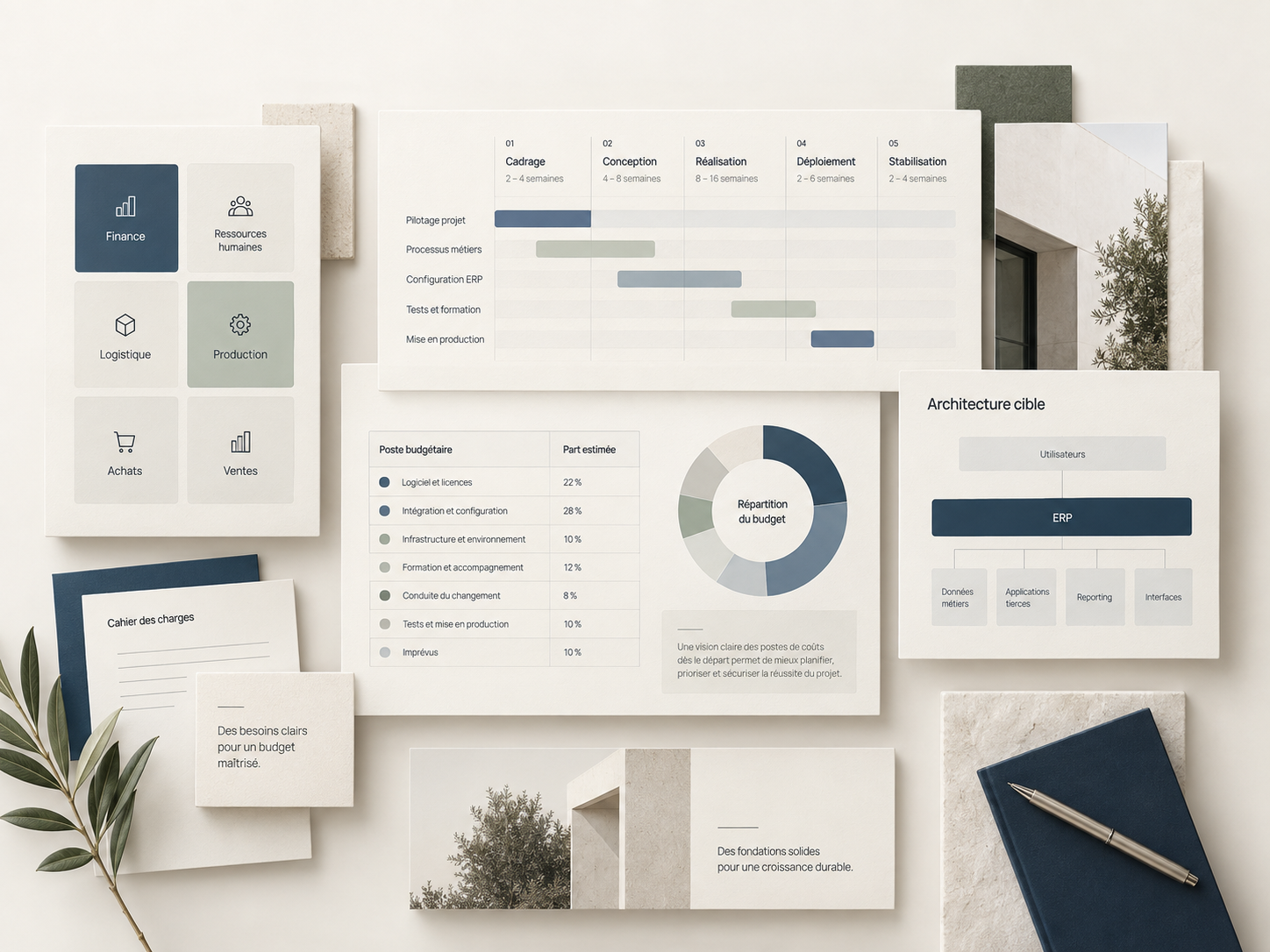
Editorial composition illustrating ERP project planning with modules, timeline, budget items, and target architecture.

Clean data requires an upfront investment before it generates savings.

Extraction, cleaning, mapping, conversion, loading, reconciliation, and business validation must each have clear owners and a dedicated schedule.

Sources + cleaning + rules + cycles + reconciliation + validation

  • Volume is not the best indicator.
  • Business units must validate the data.
  • Late-stage data migration costs double.

What you actually pay for in an ERP data migration

  1. Profiling. Measuring volumes, duplicates, incomplete fields, inconsistencies, and data that shouldn't be migrated.
  2. Cleansing. Correcting customers, suppliers, items, accounts, units, addresses, and technical data before loading the new ERP.
  3. Mapping and rules. Defining how each source field becomes target data, who decides on exceptions, and which transformations are permitted.
  4. Extraction and transformation. Building the queries, scripts, files, or pipelines needed to produce reproducible datasets.
  5. Mock loads and reconciliations. Repeating migrations, measuring rejections, and proving that balances, quantities, and master data match up.
  6. Archiving and governance. Deciding what remains accessible outside the ERP, for how long, and with what retention responsibilities.

Factors that cause migration costs to skyrocket

  • Number of source systems. Each source adds new formats, owners, and reconciliation rules.
  • Data quality. Manual cleansing quickly consumes more effort than the migration tool itself.
  • Historical data. Migrating ten years of transactions costs more than just carrying over balances and open items.
  • Technical data. Bills of materials, routings, batches, and complex structures require more validation.
  • Proof criteria. The more detailed the reconciliations need to be, the more preparation is required for controls and reports.

Set your acceptance criteria before the first mock load. Otherwise, the migration becomes an endless cycle of corrections.

To translate these cost factors into a scope and business case tailored to your organization, our independent ERP scoping clarifies the assumptions that need to be validated before comparing proposals. Share your ERP context and the next decision you need to make.

The questions that reveal the true effort of a migration.

  1. Who owns each data domain?
  2. What historical data is actually necessary?
  3. What quality thresholds must be met?
  4. How many full cycles are planned?
  5. How will balances be reconciled?

Frequently asked questions

How many migration cycles should be planned?

A single full trial is rarely enough for critical data.

Who is responsible for data cleansing?

The work is shared: IT provides the tools and performs the transformation, while business owners define the rules and validate quality.

Measure data quality before committing to a date.

PlanAxion can scope volumes, cleansing rules, responsibilities, reloads, and reconciliation criteria before migration becomes the critical path.

Scope my data migration