
{ "@context": "https://schema.org", "@type": "WebPage", "@id": "https://www.planaxion.com/en-ca/erp-decisions/erp-integration-cost#webpage", "name": "ERP integration costs", "url": "https://www.planaxion.com/en-ca/erp-decisions/erp-integration-cost", "inLanguage": "en-CA", "publisher": { "@type": "Organization", "@id": "https://www.planaxion.com/#organization", "name": "PlanAxion", "url": "https://www.planaxion.com/" } }

ERP Decision Guide

How much do ERP integrations cost?

The number of interfaces matters, but the real cost depends on their criticality, the level of documentation, the quality of the source systems, and the number of exceptions to manage.
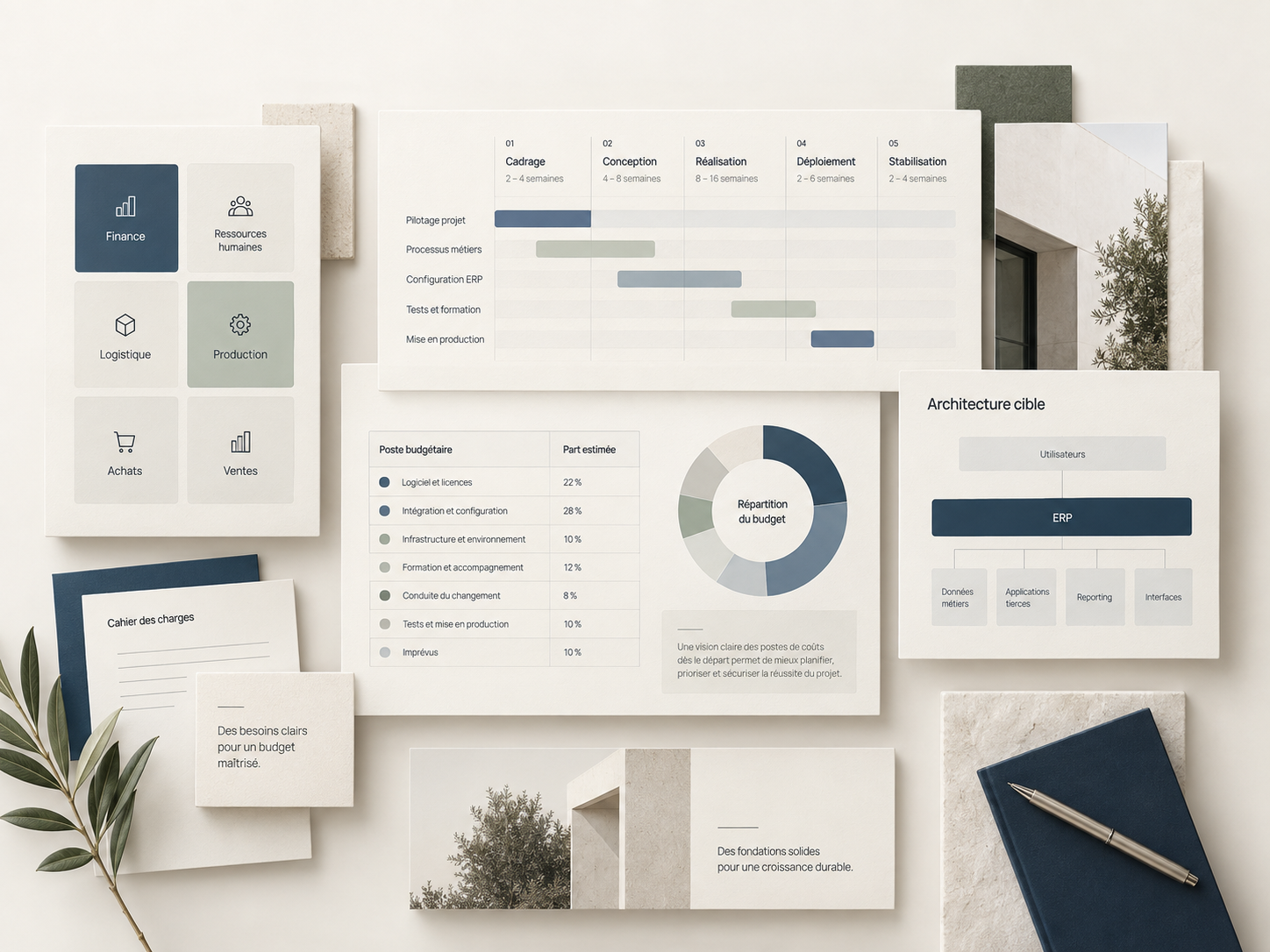
Editorial composition illustrating ERP project planning with modules, timeline, budget items, and target architecture.

An interface that looks simple on paper can turn into a mini-project.

A simple, documented API can be quick. A critical integration involving legacy systems, batch processing, data migration, and validation can become a mini-project.

Design + development + security + testing + migration + operations

  • Criticality changes the effort required.
  • Documentation reduces uncertainty.
  • Operations matter too.

The cost of an ERP integration is never limited to the API

  1. Architecture and middleware. You need to decide where data flows, who orchestrates the streams, and how to avoid point-to-point dependencies.
  2. Interface availability. An API might exist, but the available objects, limits, events, and permissions determine the actual effort.
  3. Data ownership. Customers, suppliers, items, prices, and orders must have a master system and synchronization rules.
  4. Error handling. Monitoring, alerts, retries, duplicates, and queues must be designed as operational functions.
  5. Security and testing. Authentication, permissions, sensitive data, volume testing, and failure scenarios are all part of the cost.
  6. Maintenance. API versions, field changes, new applications, and operational support create costs after the project is complete.

Questions that reveal an underestimated integration

  • Volume. How many transactions, and how often?
  • Criticality. What happens if the flow stops for an hour or a day?
  • Exceptions. Who sees the error, who fixes it, and how is the transaction reprocessed?
  • Master data. Which system wins in the event of a conflict?
  • Operations. Who monitors and maintains the integration after go-live?

Get the full lifecycle of the flow costed. An integration that works in a demo but isn't monitored becomes expensive the moment it breaks.

To translate these cost factors into a scope and business case tailored to your organization, our independent ERP scoping clarifies the assumptions that need to be validated before comparing proposals. Share your ERP context and the next decision you need to make.

What you need to know before pricing an ERP integration.

  1. Which interfaces would bring the business to a halt if they failed?
  2. Are the formats documented?
  3. Who owns each source system?
  4. How will errors be handled?
  5. What volumes and response times must be guaranteed?

Frequently asked questions

Can an integration be estimated with a fixed price?

Only when the scope, systems, volumes, rules, and error scenarios are sufficiently understood.

Does middleware reduce costs?

It can standardize certain integrations, but it also adds a platform that must be designed and maintained.

Inventory your data flows before negotiating interface pricing.

PlanAxion can map out systems, data owners, frequencies, volumes, and exceptions to make integration estimates comparable.

Scope my ERP integrations