
ERP Decision Guide
Budget overruns don't always come from the software itself. They often stem from client-side work, data, interfaces, testing, training, and items assumed to be free in the proposal.
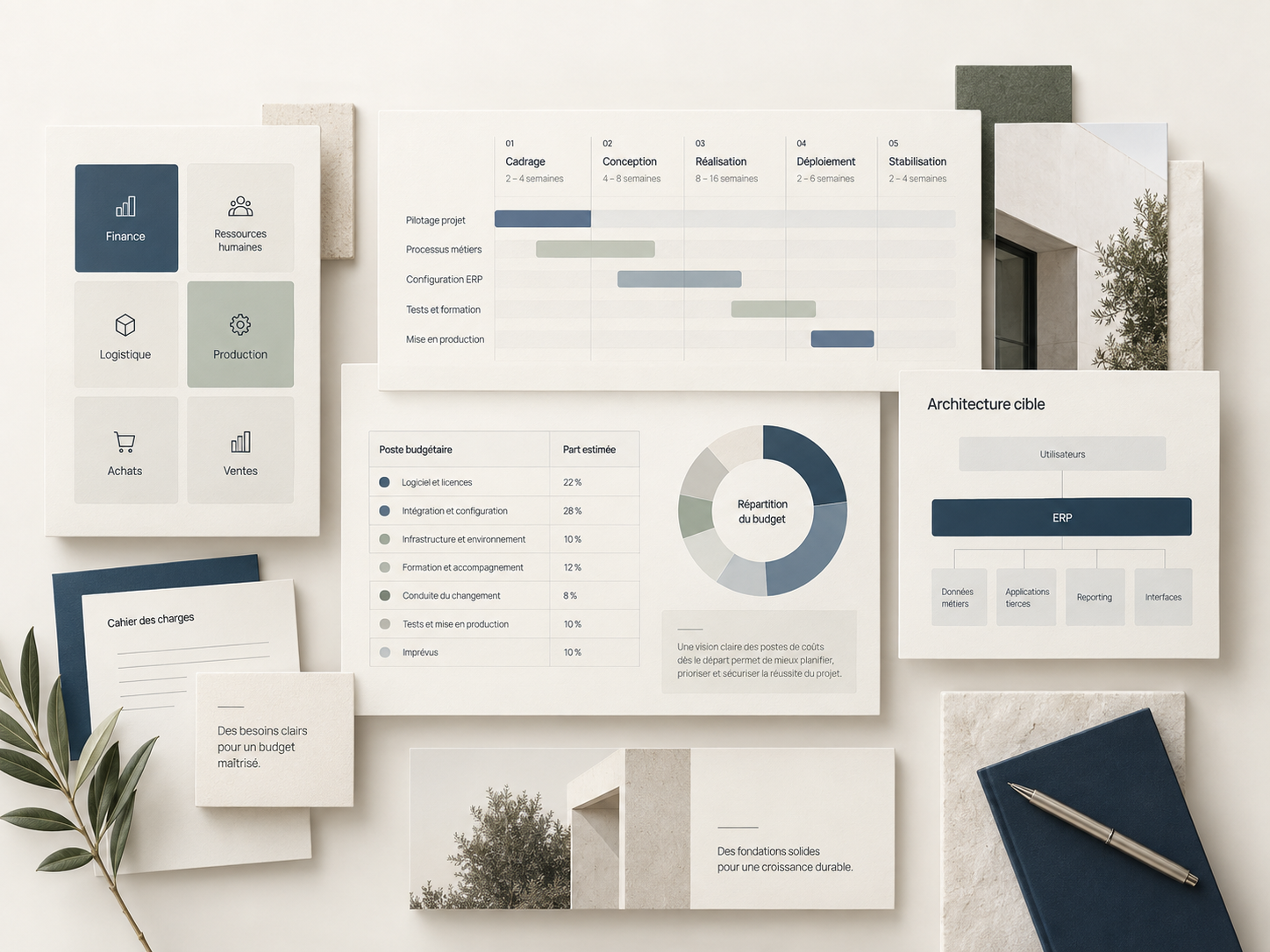
A credible budget includes internal costs, integrator exclusions, peripheral work, and the buffer needed to absorb the unknowns.
Quoted price + client work + exclusions + risks + operations
The best antidote to hidden costs is a testable scope, with responsibilities, exclusions, and assumptions written down before comparing prices.
To translate these cost factors into a scope and business case tailored to your organization, our independent ERP scoping clarifies the assumptions that need to be validated before comparing proposals. Share your ERP context and the next decision you need to make.
Internal resources, data preparation, minor integrations, retesting, training, and post-go-live stabilization.
Yes, otherwise the total program cost will appear artificially low.
PlanAxion can cross-check exclusions, client responsibilities, dependencies, and peripheral tasks before they turn into change requests.
Have hidden costs reviewed