
{ "@context": "https://schema.org", "@type": "WebPage", "@id": "https://www.planaxion.com/en-ca/erp-decisions/oracle-fusion-cloud-implementation-cost#webpage", "name": "Oracle Fusion Cloud ERP implementation cost", "url": "https://www.planaxion.com/en-ca/erp-decisions/oracle-fusion-cloud-implementation-cost", "inLanguage": "en-CA", "publisher": { "@type": "Organization", "@id": "https://www.planaxion.com/#organization", "name": "PlanAxion", "url": "https://www.planaxion.com/" } }

ERP Decision Guide

How much does an Oracle Fusion Cloud ERP implementation cost?

The budget depends on the scope of Finance, procurement, supply chain, integrations, historical data, and the level of transformation required.
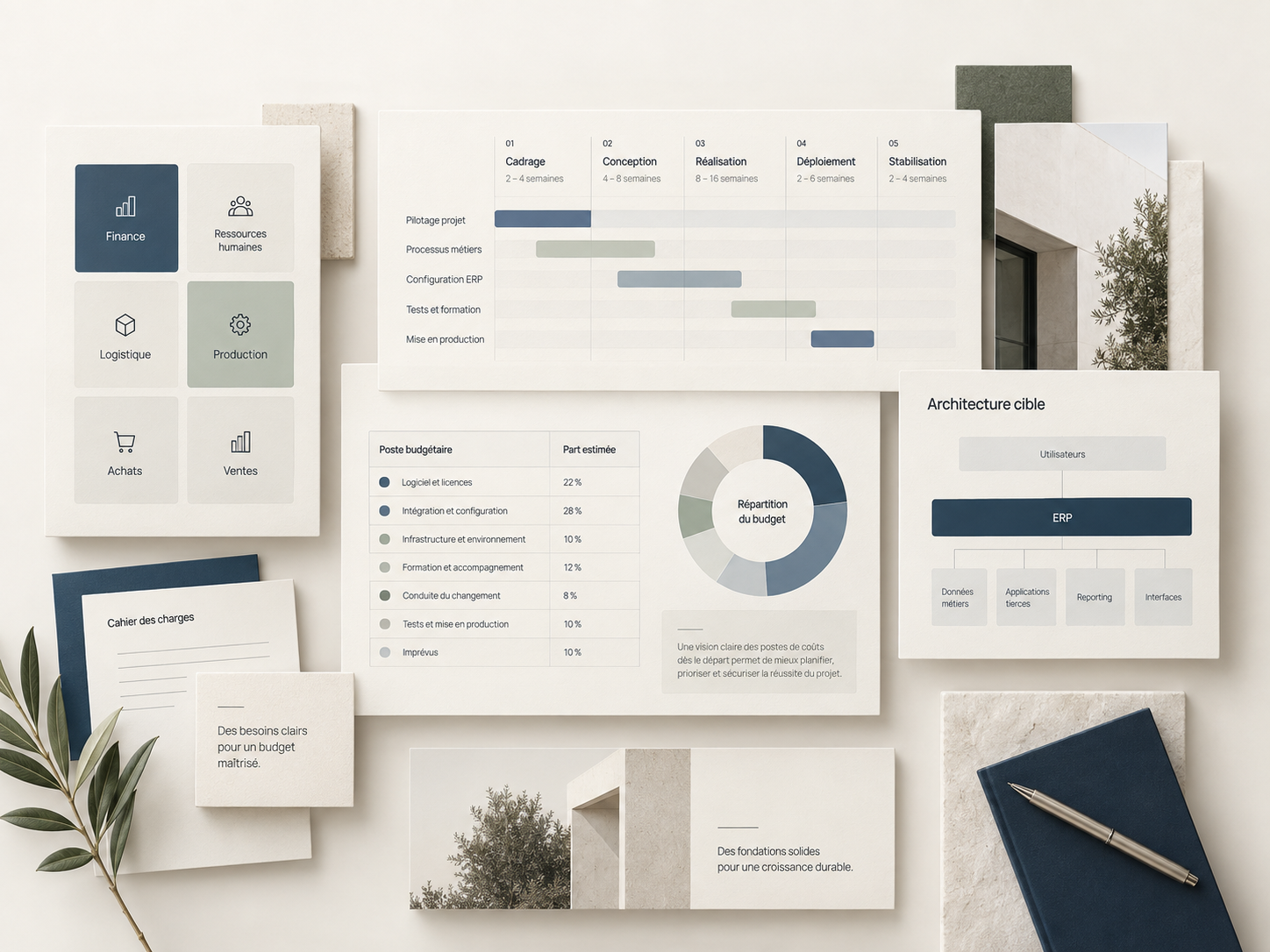
Editorial composition illustrating ERP project planning with modules, timeline, budget items, and target architecture.

The project scope has a greater impact on the budget than the list price.

A credible estimate distinguishes between the Oracle subscription and the work involved in design, integration, migration, testing, and adoption.

Subscription + implementation + integrations + data + testing + change management

  • The functional scope significantly changes the volume of design and testing required.
  • Moving to the cloud does not eliminate the need for data cleansing or decisions regarding historical data migration.
  • Critical interfaces can be more resource-intensive than expected.

The six building blocks of an Oracle Fusion Cloud ERP budget

  1. Subscriptions and modules. Finance, procurement, projects, supply chain, HCM, or other modules change the functional scope and dependencies.
  2. Design and configuration. Corporate structures, controls, roles, workflows, accounting rules, and processes must be designed and validated.
  3. Integrations and extensions. Interfaces, middleware, extensions, and automations must include security, monitoring, and error recovery.
  4. Data and reporting. Migration, master data quality, critical reports, reconciliations, and historical data can become a project in their own right.
  5. Security, controls, and testing. Roles, segregation of duties, end-to-end testing, and control evidence must be planned from the start.
  6. Deployment and adoption. Training, operational readiness, go-live support, and stabilization are all part of the true program cost.

What must be explicit in the integrator's proposal

  • Inclusions / exclusions. Every deliverable must be tied to a specific scope and owner.
  • Assumptions. Client availability, data quality, and technical dependencies must be documented.
  • Change requests. Define what triggers a revision to the price or timeline.
  • Reports and interfaces. Avoid generic line items that hide the actual number of objects to be built.
  • Post-go-live. Specify the duration of support, exit criteria, and stabilization responsibilities.

The right budget isn't the lowest one. It’s the one where the assumptions are transparent enough to understand what will drive cost variances.

To translate these cost factors into a scope and business case tailored to your organization, our independent ERP scoping clarifies the assumptions that need to be validated before comparing proposals. Share your ERP context and the next decision you need to make.

Oracle assumptions that must be made visible before signing.

  1. Which modules are included in the first wave?
  2. How much historical data actually needs to be migrated?
  3. Which interfaces are critical for Day 1?
  4. What responsibilities are assumed by each party?
  5. What recurring costs arise after go-live?

Frequently asked questions

Does Oracle Fusion Cloud ERP have a standard implementation cost?

No. The scope, entities, interfaces, data, and deployment model all influence the level of effort.

How do you compare two Oracle proposals?

Normalize the scope, assumptions, responsibilities, deliverables, and exclusions before comparing the totals.

Compare Oracle scope before comparing prices.

PlanAxion can normalize the scope, responsibilities, and dependencies of an Oracle Fusion project before the final decision.

Have my Oracle scenario reviewed