
{ "@context": "https://schema.org", "@type": "WebPage", "@id": "https://www.planaxion.com/en-ca/erp-decisions/erp-change-management-budget#webpage", "name": "ERP Change Management Budget", "url": "https://www.planaxion.com/en-ca/erp-decisions/erp-change-management-budget", "inLanguage": "en-CA", "publisher": { "@type": "Organization", "@id": "https://www.planaxion.com/#organization", "name": "PlanAxion", "url": "https://www.planaxion.com/" } }

ERP Decision Guide

What budget should be allocated for ERP change management?

Training is only part of the job. The budget must also cover impact analysis, communications, super users, new roles, and post-go-live support.
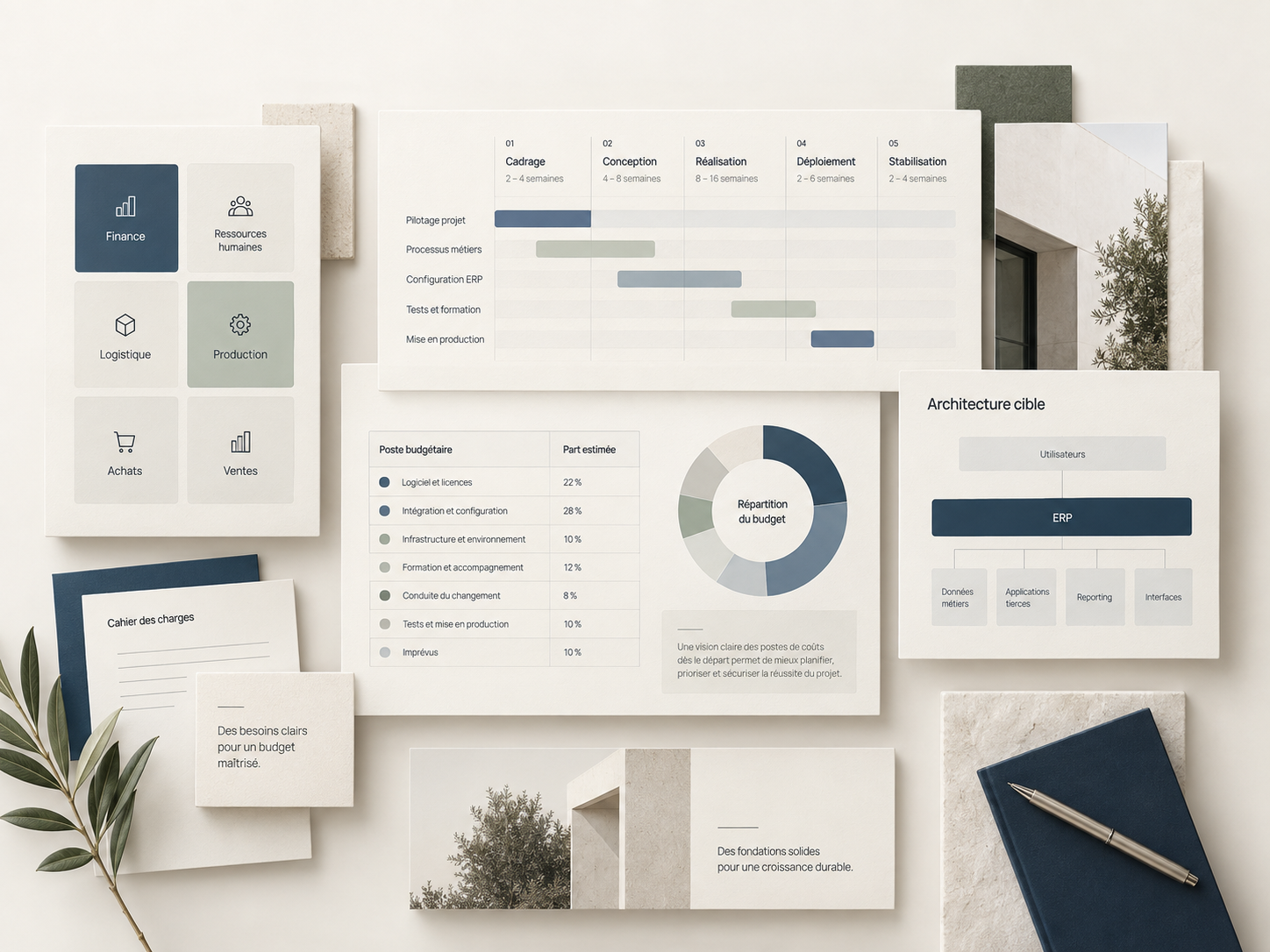
Editorial composition illustrating ERP project planning with modules, timeline, budget items, and target architecture.

Adoption must be budgeted as a deliverable.

An ERP program changes processes, responsibilities, screens, and often performance metrics. The budget must support these changes throughout the project.

Impacts + communication + network + training + support + adoption

  • Training comes late.
  • Super users have a cost.
  • Post-launch stabilization protects adoption.

Adoption budgets must be established well before training begins

  1. Impact analysis. Identify the roles, decisions, processes, data, and habits that will change for each group.
  2. Managers and change network. Prepare the leaders and super-users who will explain, mediate, and support the change on the ground.
  3. Communication. Plan messages by timing and audience, providing concrete answers about how daily work will change.
  4. Training. Create learning paths based on actual tasks, including exercises, a practice environment, and mastery criteria.
  5. Operational readiness. Verify procedures, access, roles, support, data, documentation, and team capacity before go-live.
  6. Stabilization and adoption. Measure errors, workarounds, support needs, and usage levels during the first few weeks.

Factors that influence change effort

  • Number of groups. The more roles differ, the more tailored the learning paths and messages must be.
  • Process gap. A change in interface does not have the same impact as a change in responsibilities or controls.
  • Number of locations. Schedules, managers, and local needs multiply the points of coordination.
  • Super-user availability. They must be freed up early enough to learn, test, and support their teams.
  • Post-deployment support. A launch without reinforced support capacity simply shifts the cost to operations.

Budget for adoption as a measurable deliverable with readiness and stabilization criteria, rather than as a generic training line item.

To move from these cost factors to a scope and business case tailored to your organization, our change management clarifies the assumptions to validate before comparing proposals. Present your ERP context and the next decision to be made.

The questions that prevent underfunding adoption.

  1. Which roles are actually changing?
  2. Who is freeing up the super users?
  3. How do you measure team readiness?
  4. What support is available during the first few weeks?
  5. What workarounds do we want to prevent?

Frequently asked questions

What percentage of the ERP budget should go toward change management?

There is no universal percentage. The effort depends on the number of people, the number of sites, and the scale of the changes.

Is training enough?

No. Without impact analysis, communications, manager preparation, and post-launch support, it comes too late.

Budget for change before it becomes an emergency.

PlanAxion helps make the training, super users, communications, support, and internal capacity required for go-live visible.

Frame my change budget